The Theft Starts at the Counter: How Rental Cars Disappear Before They're Overdue

In October, the Los Angeles Times and the Puente News Collaborative described Mexican cartels building fleets of trucks and SUVs from stolen U.S. rental cars, with California one of the main places they operate, alongside Texas and Arizona.
The part that stayed with me is the timing. Many of these vehicles are across the border before they are even overdue.
In a rental theft, the operator's first warning is usually the return date. That date is the thief's head start, not the operator's alarm.
How the Scheme Works
There is no break-in and no hot-wiring. The theft is a rental like any other, until it isn't. I'll describe it at the level an operator needs to recognize it, not the level that would help anyone copy it.
- An identity. The rental is made with a stolen identity, a synthetic one built from real and invented details, or by a person paid to rent the vehicle in their own name.
- A clean rental. The paperwork is in order and the payment goes through. Nothing at the counter or the kiosk looks wrong.
- The right vehicle. Pickups, large SUVs and vehicles that are easy to resell or useful on rough roads are chosen on purpose.
- A route out. The vehicle moves early, usually on the first day, and heads for the border or a port.
- The gap. Until the return date passes, the vehicle is legally where it is supposed to be: with the renter.
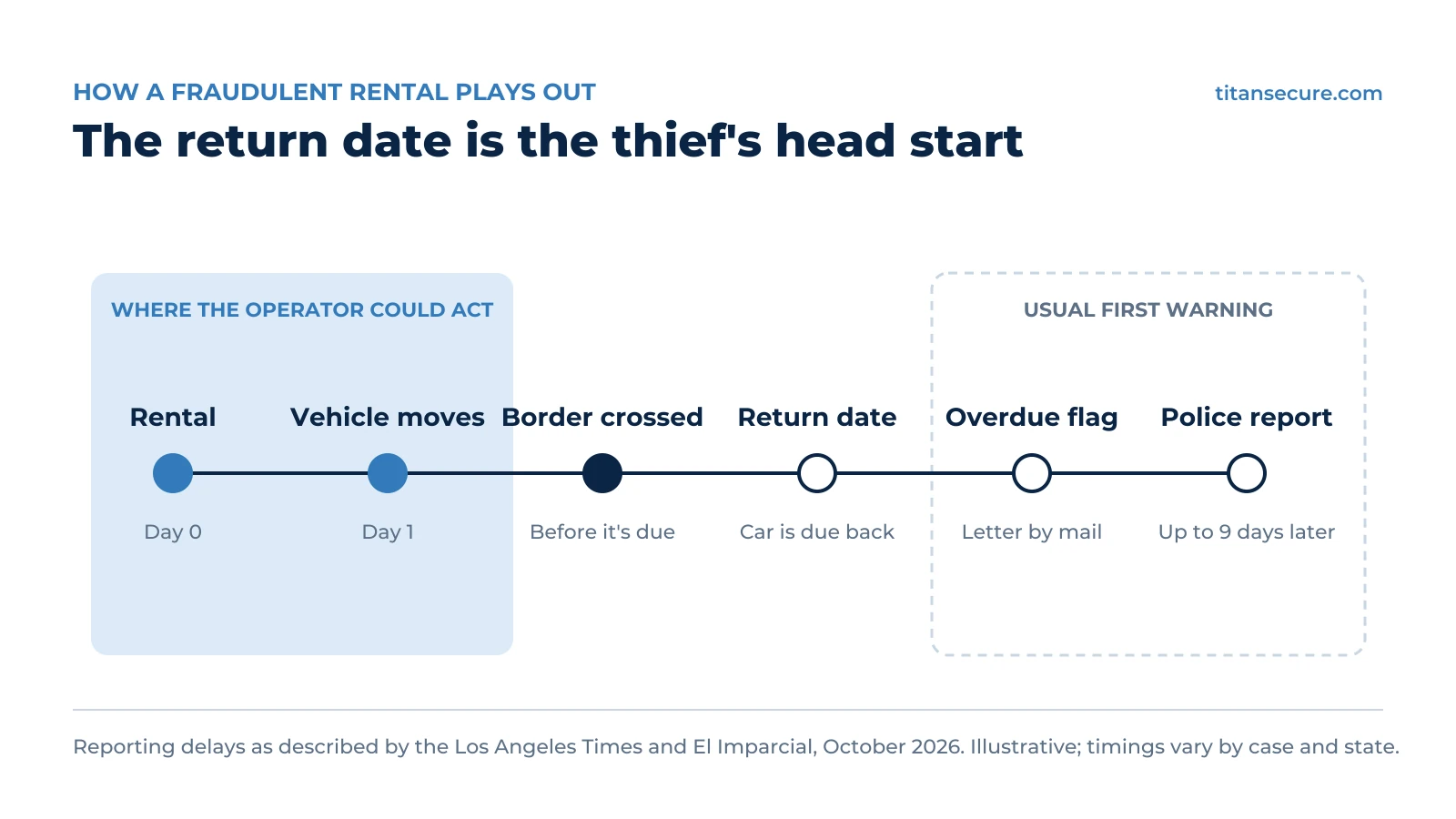
After the return date, the clock keeps running. According to the reporting, it can take up to three days to prepare a demand letter to the renter and two more to send it by certified mail. Depending on the state, it can be up to nine days before the theft can be reported to police. By then, the vehicle can be a long way from the lot.
We looked at that reporting clock in more detail in When the Theft Report Takes Nine Days.
It's Organized, Not Opportunistic
This isn't one person deciding to keep a car. It is a business with suppliers, buyers and a supply chain.
In August, The Auto Wire reported that six people had been charged in federal court in New York over about 150 rental cars worth more than $4 million. Prosecutors say the group used forged driver's licenses in other people's names and the victims' credit cards. These are charges, and the defendants are presumed innocent.
In September, an Ohio man was sentenced to five years in federal prison and ordered to repay $578,221 for his part in a ring that rented more than 20 vehicles under false or stolen identities, drove them across state lines and sold them to buyers who shipped them overseas.
Why Tracking Alone Arrives Too Late
Trackers report location. They don't stop a vehicle from moving, and they can be jammed or found and removed.
There is also a legal limit. California restricts how a rental company may use tracking information about a rented vehicle. Broadly, under Civil Code section 1939.23, it may be used to find a vehicle that has been reported stolen or missing, or once set periods after the return date have passed, and in a few other specific cases. Those rules exist to protect renters' privacy, and they are the right instinct. They also mean location data usually becomes available after the window in this timeline has closed.
Protecting the Honest Late Renter
Most late cars are just late. A flight is delayed, a trip runs long, someone forgets to call.
Any response to a suspected fraud has to start from that fact. It must never strand a legitimate customer, and it must never put a driver at risk on the road. A system that treats every late return as a theft will do more harm to honest customers than good against thieves.
What Prevention Looks Like
Prevention means acting earlier than the overdue flag, with care. These are the principles we build to:
- Act before the return date. Unusual movement early in a rental is a better signal than a missed return.
- Send alerts to a named person, someone with the authority to decide, not a shared inbox.
- Hold a confirmed-fraud vehicle once it is parked. The decision is made by an authorized person, never automatically.
- Keep a log police can use: who did what, when and why.
Between rentals, Titan keeps vehicles on the lot. Arming a unit takes effect once the vehicle is stopped with the ignition off, so it can't be driven away until the next rental is confirmed. See how Titan works for rental operators, or read why a hidden kill switch isn't enough.
The counter is where these thefts start. The return date is where most operators find out. The work is closing the gap between the two.